
A quick safety note
Electricity and batteries can cause shock, burns, and fire. Never backfeed an outlet or connect a generator to utility wiring. Have a qualified electrician handle building connections. Fuel-powered generators must run outdoors, at least 20 feet from doors, windows, and vents, following manufacturer instructions; never in a home, shed, or garage.
Start with the job, not the panel
Choose a small, specific use: charging phones, lighting a shed, or running a compatible low-power device. List each device’s rated watts and how many hours you expect to use it. Multiplying watts by hours gives watt-hours; add the daily uses together and allow for system losses. Do not assume a panel’s rated output will be available all day.
Understand the four building blocks
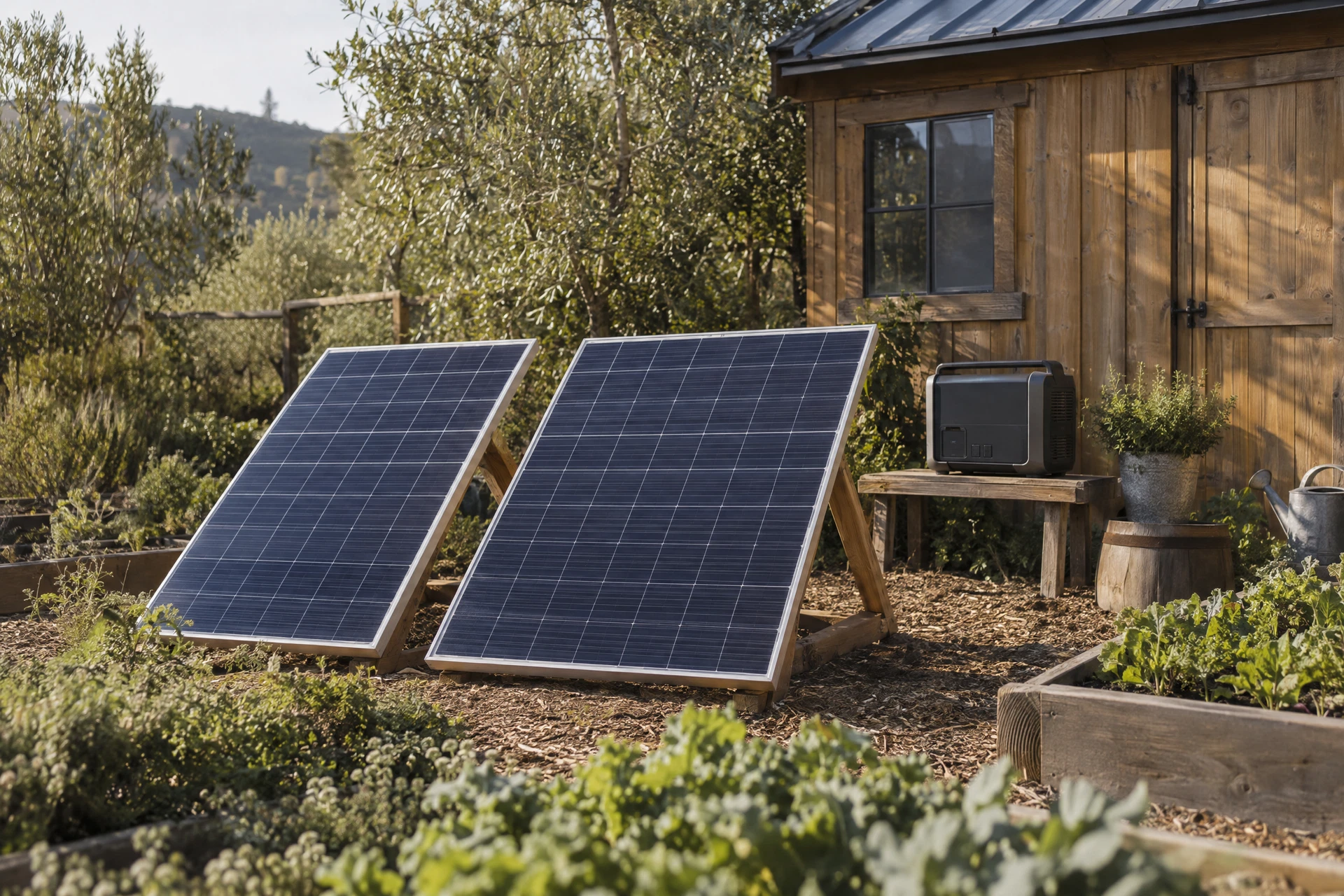
A typical off-grid arrangement needs solar panels, a compatible charge controller, energy storage, and appropriate outputs for the devices you want to run. For a first project, an enclosed, manufacturer-designed portable power station and its approved panels can reduce integration complexity. Match voltage, connector type, polarity, and input limits using the manuals—not visual similarity.
Plan the site and budget
Look for a stable location with good sun and minimal shading. Think about weather protection, secure mounting, ventilation, cable routing, and access for maintenance. Compare the complete system cost, including mounting and manufacturer-approved accessories. Output varies with sunlight, temperature, orientation, and storage capacity.
Know where DIY stops
Use equipment only as directed by its manufacturer. Fixed wiring, roof work, battery assembly, and connecting equipment to building circuits need suitable expertise and may require permits. Start with a small, standalone system that does not connect to household wiring.
Keep learning from trusted sources
Have a question about this topic?
Send us your question or suggest an idea for a future guide.
Talk to The Clever Fix