
A quick safety note
This guide concerns non-potable garden water only. Collected rainwater and water from air can carry microorganisms or chemical contaminants. Do not drink it without a professionally designed treatment system and appropriate testing.
Choose a useful, manageable system
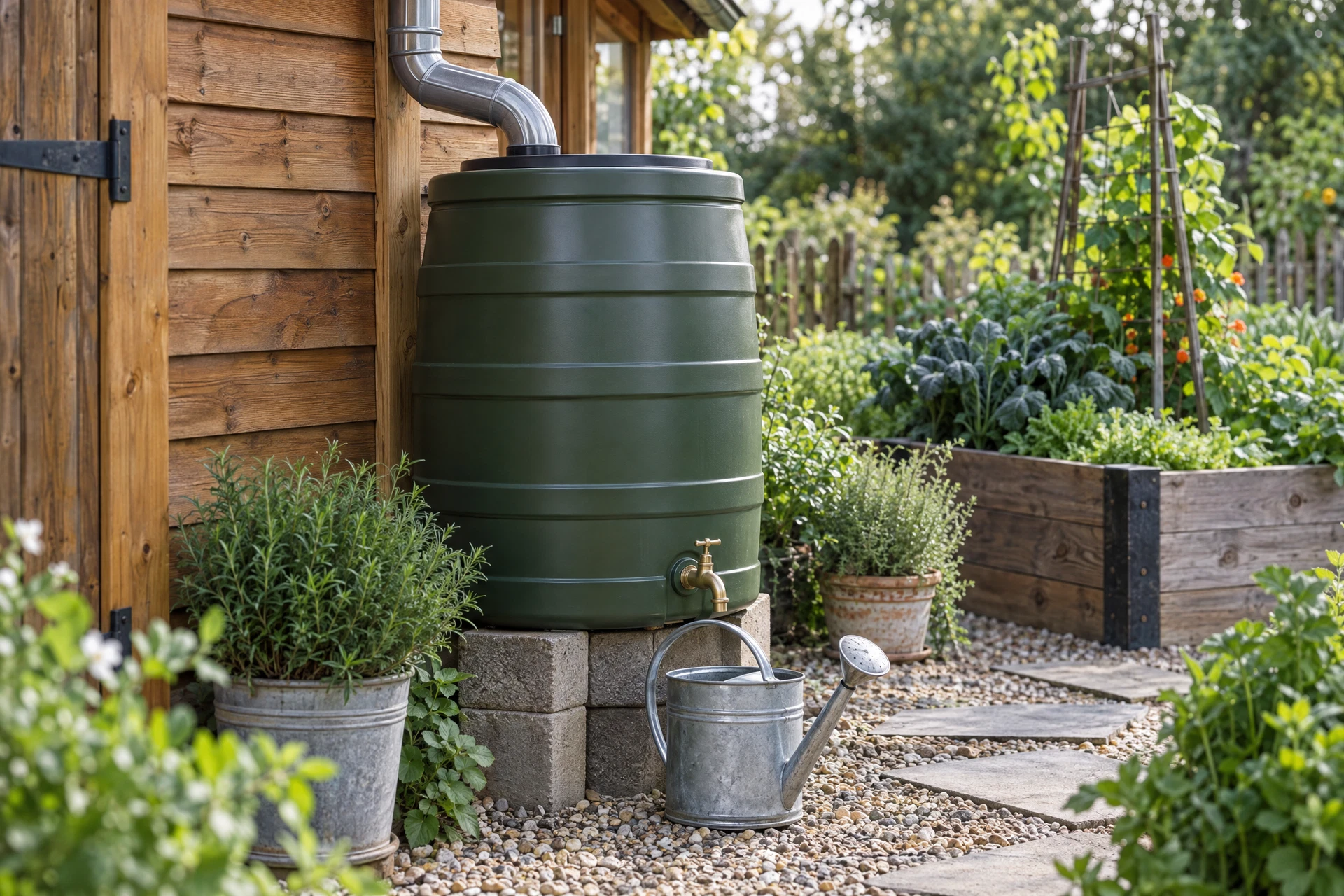
A covered rain barrel can collect roof runoff for watering ornamental plants. Choose a purpose-made container, not a barrel that previously held unknown chemicals. First check local collection rules, any property requirements, and whether your roof materials are suitable for the intended use.
Think through the route water takes
Your plan should cover gutters, a compatible downspout diverter, a screened inlet, a secure lid, an accessible tap, and a safe overflow route away from the building foundation. Keep insects and debris out. A full barrel is very heavy, so use a level support rated for the loaded weight and secure it against tipping.
Keep collected water separate
Do not connect untreated rainwater to drinking-water plumbing. Label the container as non-potable and prevent access by children and pets. Roof runoff may contain germs and chemicals even when it looks clear. Choose the watering method and plants carefully; ask a local extension service about food-garden use.
Build maintenance into the plan
Inspect and clear screens and gutters, check for leaks and standing overflow, and clean the container according to its manufacturer. Follow local mosquito guidance and drain or winterize where freezing could damage the equipment.
What about water from air?
Atmospheric water generators collect moisture from air, but their output depends on humidity and temperature and they need energy. Condensate is not automatically safe to drink. Any drinking-water project needs suitable treatment, maintenance, and independent water-quality testing—not just a homemade filter.
Keep learning from trusted sources
Have a question about this topic?
Send us your question or suggest an idea for a future guide.
Talk to The Clever Fix